




The core answer first: a sound proof insulation board only delivers its rated acoustic performance when the mass, damping, and airtight seal are specified together. Last month we finished a municipal case-handling room retrofit, roughly 380 square meters in an eastern provincial city, and the acceptance test passed on the first run. The inspector wrote one number on the form: background noise inside the interview rooms dropped to 32 dB(A) from 58 dB(A) before the work started. That number is why I am writing this down.
I work factory QC, not sales. Every batch of board that leaves our line gets its density and fire rating checked by hand, and I have watched plenty of projects fail because someone bought on price alone. If you are only comparing quotes, you will walk straight into the trap.
What the caliper says versus what the datasheet promises
A sound proof insulation board is any rigid or semi-rigid panel whose job is to block airborne noise rather than absorb it, and the two functions get confused constantly. Absorption controls echo inside a room. Insulation blocks transmission through the wall. A 12mm sound proof gypsum board with a 1.2 mm steel plate laminated to the back behaves nothing like a 12mm plain board, even though both are sold under the same category name.
Open a container from a new supplier and the first thing I do is weigh a random panel. A 1200 x 2400 mm sheet advertised at 12mm should sit between 9.5 and 10.5 kg. Below 9 kg, the core density is thin and the Rw number on the certificate was measured on a different sample. That happens more than you think.
Density drives mass, mass drives transmission loss. A rule of thumb that survives field testing: doubling surface mass buys you roughly 5 to 6 dB of additional reduction, provided the seal is intact. If the perimeter is not caulked or the electrical boxes are not wrapped, you can add mass all day and gain almost nothing.
Four board types, one table, no marketing
Clients ask me to compare acoustic insulation board options constantly, so here is the version I would hand a contractor. These are typical values from batches we have run and from project submittals, not brochure numbers.
| Board type | Typical thickness | Surface mass | Rw (lab) | Fire rating | Indicative cost per m2 |
|---|---|---|---|---|---|
| Standard sound proof gypsum board | 12.5 mm | 10.5 kg/m2 | 30 dB | Class A | USD 6.5 - 8.0 |
| High-density acoustic insulation sound board | 16 mm | 14.8 kg/m2 | 36 dB | Class A | USD 11.0 - 14.0 |
| Damped sandwich panel with viscoelastic layer | 12.5 mm + 1 mm | 13.2 kg/m2 | 41 dB | Class A | USD 22.0 - 28.0 |
| Mineral fiber noise insulation board | 50 mm | 4.2 kg/m2 | Absorption NRC 0.85, transmission Rw 22 dB | Class A | USD 4.5 - 6.0 |
Read the table with care. The mineral fiber board has the best absorption number and the worst transmission number. Put it inside a stud cavity as infill and it earns its keep. Use it alone as a wall surface and the person next door hears every word.
The damped sandwich panel is the one people hesitate on because of price. In an interview room where intelligibility matters, a wall assembly using it plus 50mm mineral fiber infill and double 12.5mm board on the corridor side typically lands around Rw 55 to 58 dB in a lab, and 48 to 52 dB in the field after flanking paths are dealt with. The real installed assembly is what protects conversations, not the single panel on the certificate.
Fire rating is not a checkbox you skip to save money
Every board I sign off on goes through a burn check against batch samples, because fire performance is where cheap material shows its hand fastest. GB 55016-2021 sets the baseline for building acoustic and fire requirements in China, and for a case-handling room the wall assembly must hold a fire resistance rating of at least 1 hour. That means Class A boards throughout, no exceptions, and a mineral core with oxygen index of 32% or higher in our incoming inspection.
A supplier once sent me a pallet where the surface paper was rated Class A but the core was ordinary paper-faced gypsum with a combustible foam layer glued inside. The combustion test told the truth in under two minutes. Flame spread hit the top of the sample box. That pallet went back.
If you want a single hard number to quote to a client, this works: the assembly must carry a fire resistance rating of 1 hour or more, and the core board should test at oxygen index 32% minimum. Anything below that is not worth the argument with the fire inspector.
Why the same wall sounds different in two rooms
Flanking paths are the quiet killer. I have seen two adjacent interview rooms with identical board specs, identical stud spacing at 400 mm centers, and a 6 dB difference in measured performance. The gap came down to a shared ceiling plenum and unsealed conduit penetrations.
Sound proofing boards do not work as a surface treatment. They work as part of an assembly: resilient channels or independent studs to break the vibration bridge, mineral wool infill to damp the cavity, acoustic caulk at every joint and perimeter, and putty pads behind every electrical box. Skip any one and the chain fails at that link.
Real installed performance typically runs 6 to 10 dB below the lab Rw figure. Budget for that gap. A client who expects 55 dB from a 55 dB certificate will call you back angry.
How to read a board quote in under five minutes
Ask for three documents and the comparison gets honest fast. A batch-specific test report from a lab with CMA accreditation. A material safety data sheet that states the core composition, not just the face paper. And a sample panel, so you can weigh it and cut it yourself.
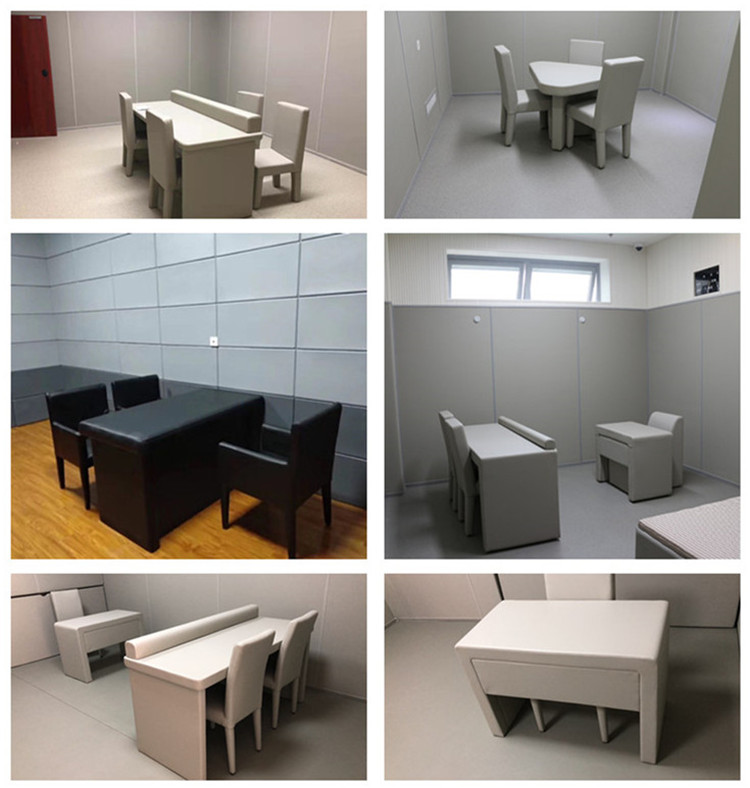
For case-handling rooms, court facilities, recording studios, and hospital consultation areas, the damped sandwich panel plus mineral infill assembly is what I recommend. For a home theater or a shared apartment wall, honestly, the 16mm high-density acoustic insulation board at Rw 36 dB is enough, and I would not push a client to the sandwich product. The marginal gain does not justify the price at that scale.
One habit that saves projects: verify the board thickness with a caliper on site before installation, not after. Under-thickness boards are the most common substitution, and a 10.5mm panel sold as 12.5mm costs the wall about 4 dB.
What it costs and where the margin hides
Material cost for a sound proof insulation board wall runs USD 6.5 to 28 per square meter before labor, depending on type. Labor for a proper assembly with resilient channels, double-layer board, and sealing typically adds 40% to 70% of the material figure. A quote that is 30% below the field average is not a deal, it is a substitution waiting to happen.
For the 380 square meter case-handling project, we supplied the high-density and damped panels through a manufacturer-direct channel, and the client saved roughly 18% against the broker quotes collected at tender stage. Factory-direct pricing narrows the gap between specified and delivered material because there is one less party with an incentive to swap grades.
A word on installation method, since it comes up in nearly every kickoff meeting: boards should be installed with staggered joints, screw spacing at 200 mm on edges and 300 mm in the field, and a 5mm gap at the perimeter filled with acoustic sealant. Fastening directly to a single stud line without resilient isolation drops the assembly performance by around 8 dB in field measurements.
Acceptance testing tells you the truth
The acceptance standard for this kind of work references the background noise limit in the room, measured with the mechanical systems running. For the case-handling rooms, the target was 35 dB(A) or lower, and we hit 32 dB(A). The test was done with a calibrated sound level meter at three positions per room, averaged over 60 seconds each.
Bring the batch test report to acceptance. Missing that document is the single most common reason a handover gets delayed, and it is entirely avoidable.
The one rule I would give anyone specifying this material: demand a batch-specific CMA test report and weigh the panel yourself before it goes on the wall. Skip that step and you are buying a promise, not a board. For project quotes, panel samples, and a free site measurement, contact our team directly and we will match the assembly to your room rather than sell you a pallet.
How much does a sound proof insulation board cost per square meter?
Expect USD 6.5 to 8 per square meter for standard 12.5mm board, USD 11 to 14 for 16mm high-density acoustic insulation board, and USD 22 to 28 for damped sandwich panels. Labor adds 40% to 70% of the material figure.
Which is better, sound proof gypsum board or mineral fiber noise insulation board?
They do different jobs. Gypsum board blocks transmission with mass and reaches Rw 30 to 41 dB. Mineral fiber absorbs sound with NRC up to 0.85 but transmits at only Rw 22 dB. Use mineral fiber as cavity infill, not as a standalone wall.
What fire rating does a sound proofing board need for a case-handling room?
The wall assembly must hold a fire resistance rating of at least 1 hour under GB 55016-2021, which requires Class A boards. We check incoming cores at oxygen index 32% minimum and reject anything combustible inside the core.
How long does installation take for a 300 square meter room?
A proper assembly with resilient channels, double-layer board, and acoustic sealing runs about 5 to 7 working days for two installers at 300 square meters. Rushing the sealing stage causes most of the performance failures we see at acceptance.
Why does my wall still pass noise after installing acoustic insulation board?
Flanking paths are the usual cause. Unsealed electrical boxes, shared ceiling plenums, and perimeter gaps let sound bypass the board. Seal every penetration with acoustic caulk and use putty pads behind outlets. This typically recovers 6 to 10 dB.
What is the difference between a sound insulating plaster board and a standard plasterboard?
Sound insulating plaster board uses a denser core, often with a viscoelastic damping layer, reaching Rw 36 to 41 dB. Standard plasterboard of the same thickness sits near Rw 30 dB. The mass and damping layer, not the paper face, drive the difference.

Leave A Comment